
🙏 Welcome to Akhand Samaj Seva Samiti and Trustt • Serving Humanity Since 2014 • Donate Now & Support a Cause • Contact Us for Volunteering 🙏
🙏 Since 2014 • Registered NGO

Helping Today.
Helping Tomorrow.

Akhand Samaj Seva Trust is dedicated to uplifting communities.
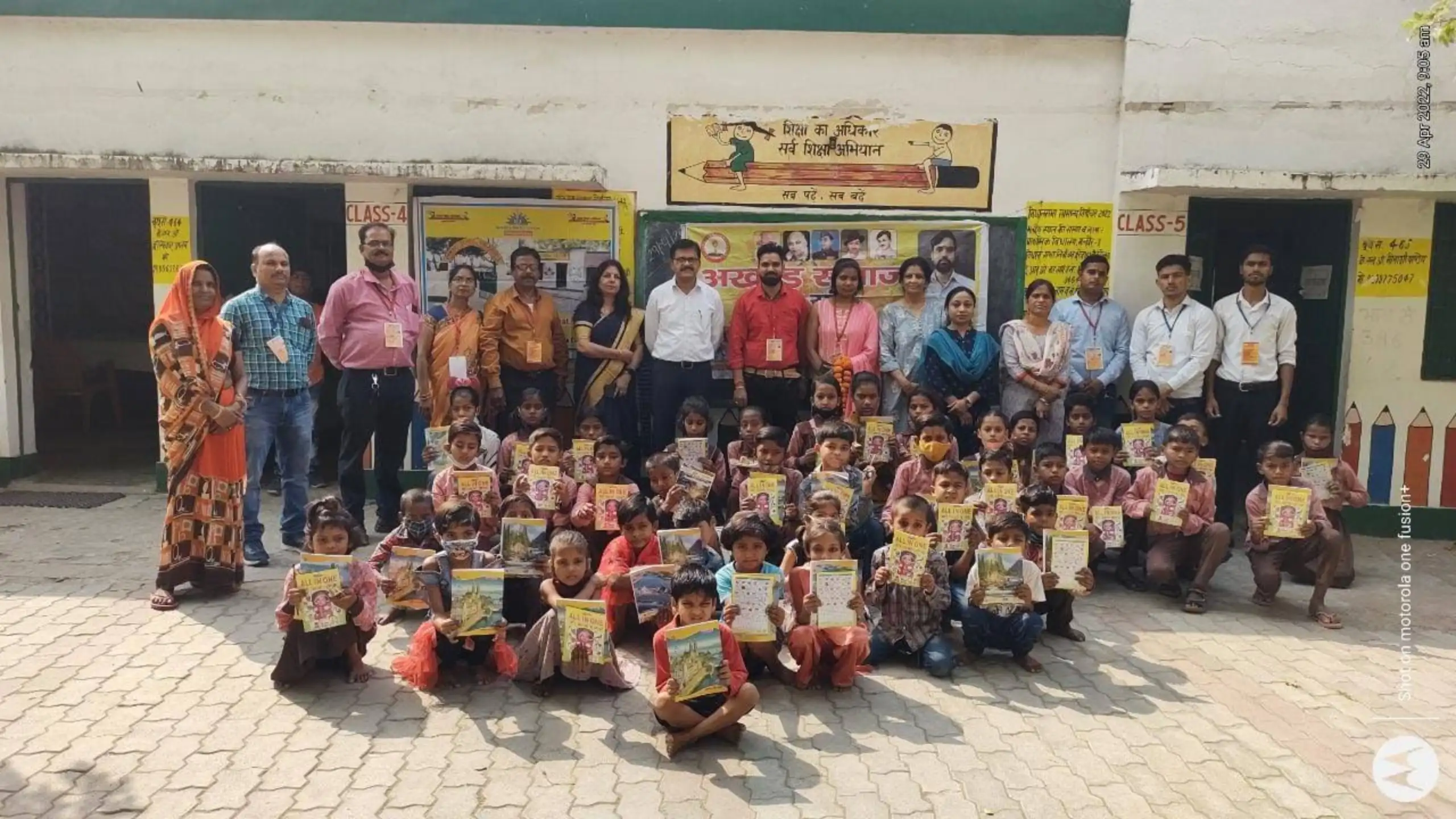
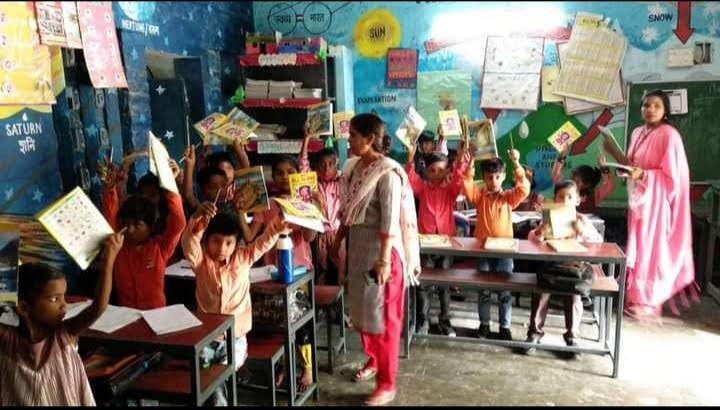
📚 Education Support

Empowering
Young Minds

Providing education and opportunities to children.
🏥 Healthcare

Care for
Every Life

Healthcare support for underprivileged families.
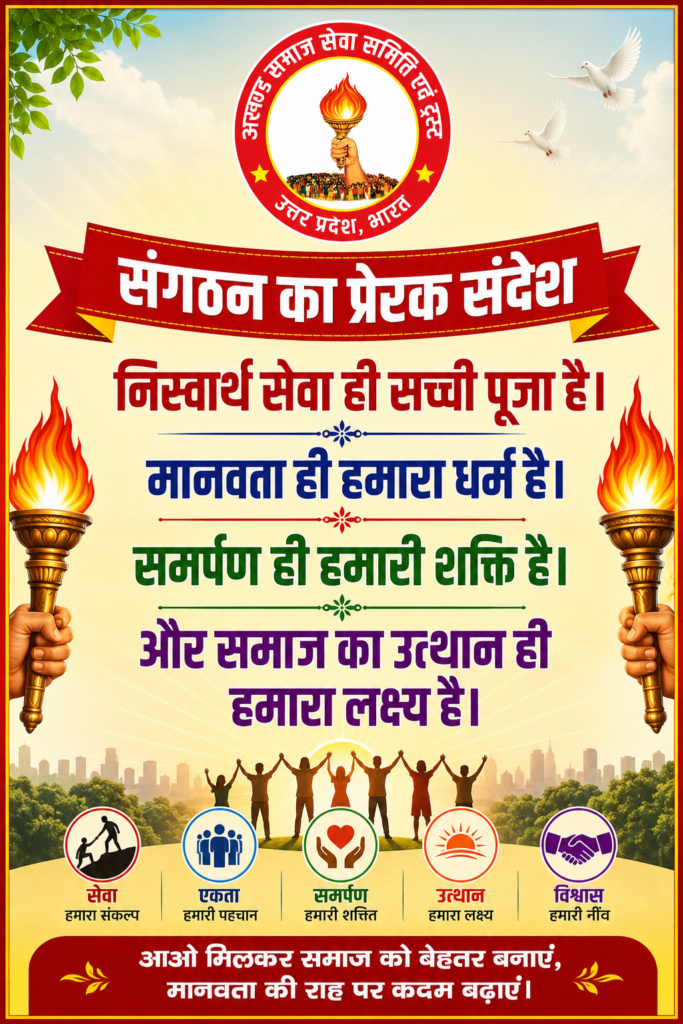
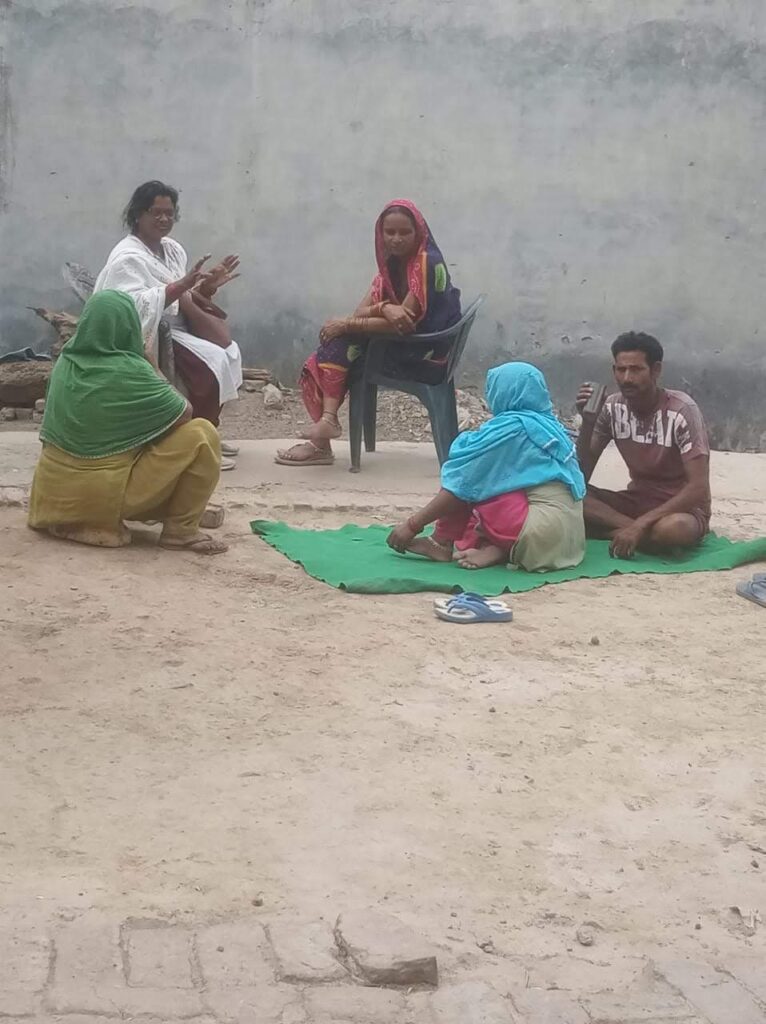
🤝 Community Support

Together We
Make Change

Join us in building a better future.
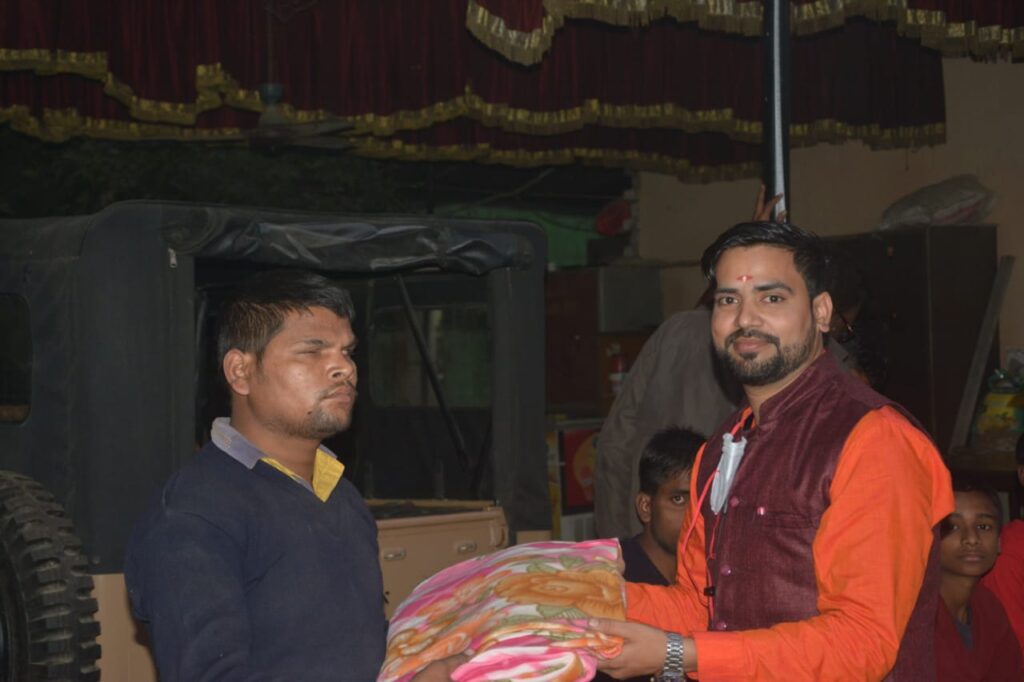
10+

Years of Service

5000+

Lives Impacted

50+

Volunteers

100+

Events Organized

About Us

Driving Change with Compassion

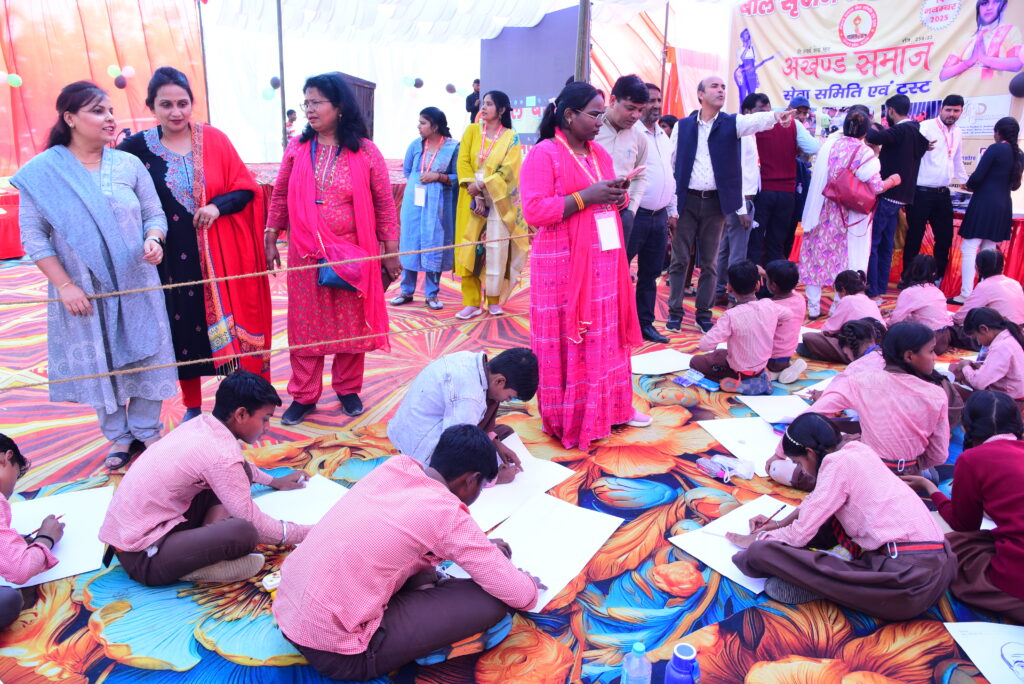
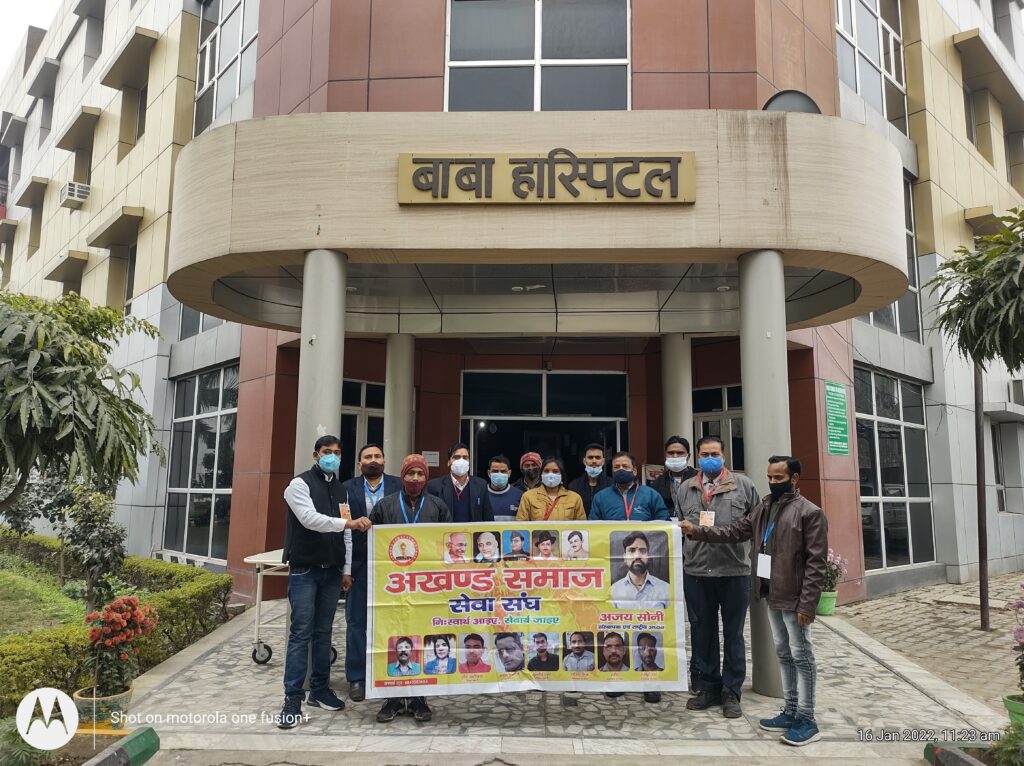
भारत देश की एकता एवं अखंडता को बनाए रखने में सबसे बड़ा योगदान हमारे समाज एवं हमारी संस्कृति का है। अखंड समाज सेवा समिति एवं ट्रस्ट की स्थापना 1 अक्टूबर 2014 से कार्यरत है।

Our Core Missions

What We Do

Medical Treatment
🏥

Medical Treatment

We extend a healing hand to those in need, ensuring access to essential medical support that restores well-being and renews hope.

Healthy Food
🍽️

Healthy Food

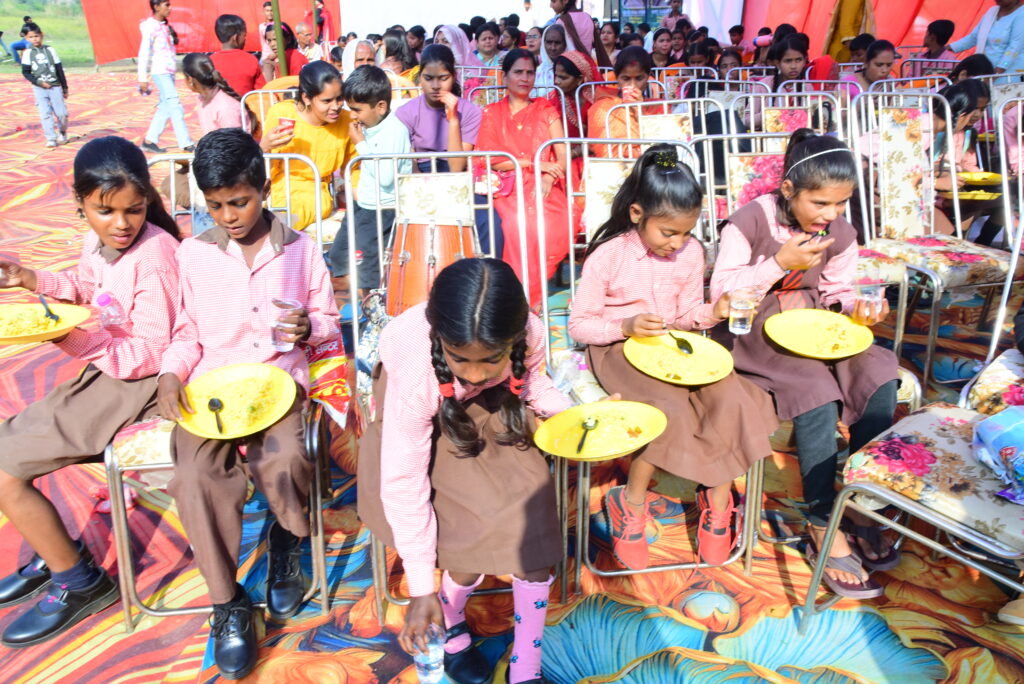
We are committed to alleviating hunger by providing impoverished communities with nourishing and wholesome food.

Education
📚

Education

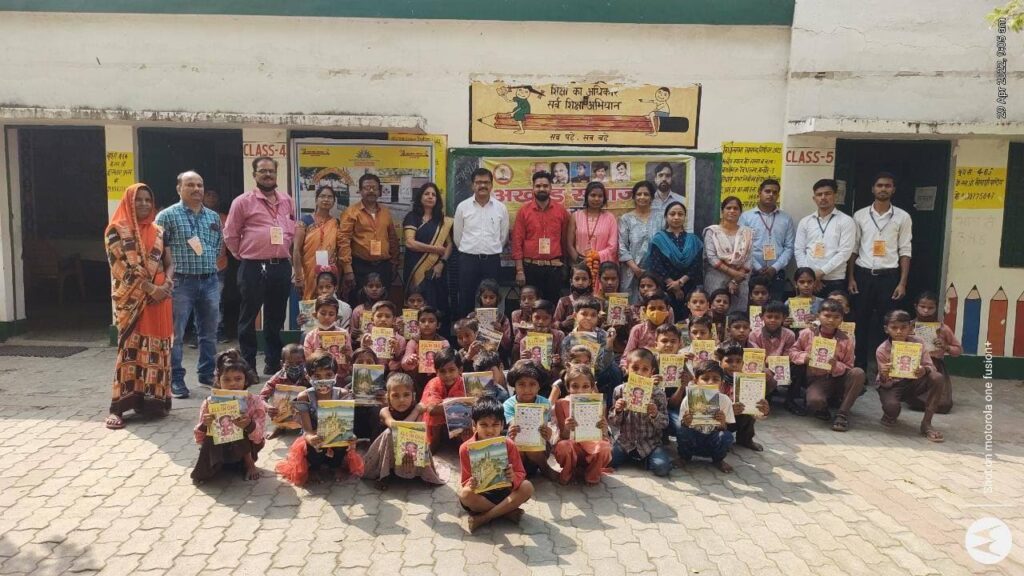
Empowering individuals with knowledge and skills that light the way to a brighter future.
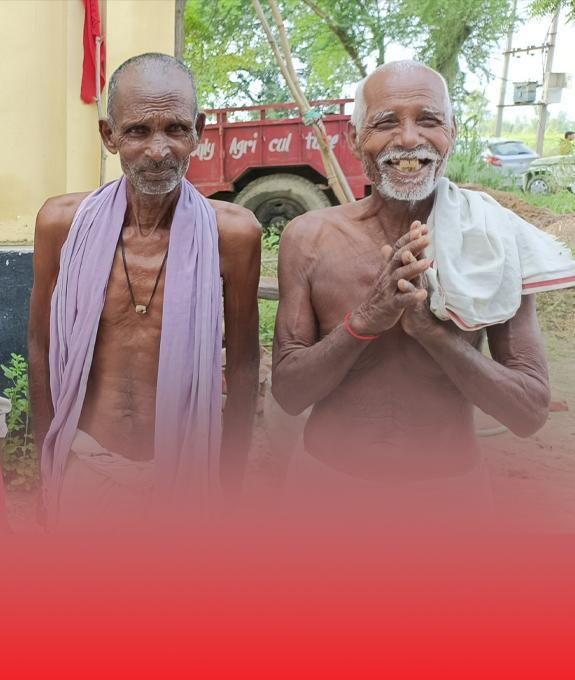
Elderly Care
👵

Elderly Care

Providing dignity and care to our elders who need support and companionship.

Women Empowerment
👩

Women Empowerment

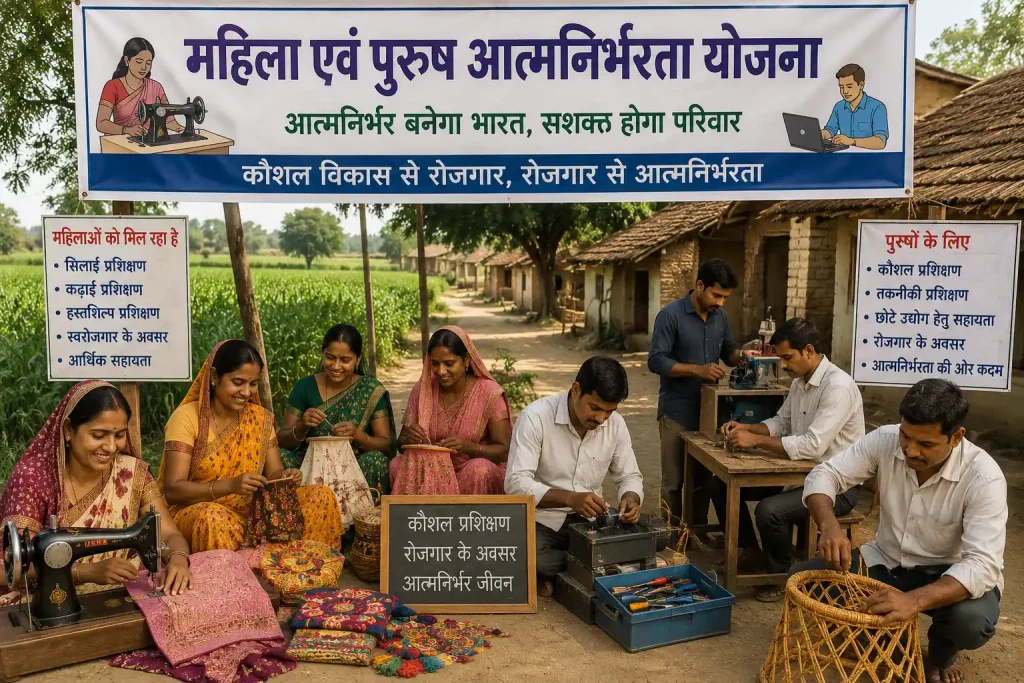
Training and empowering women with skills to become self-reliant and confident.

Environment
🌱

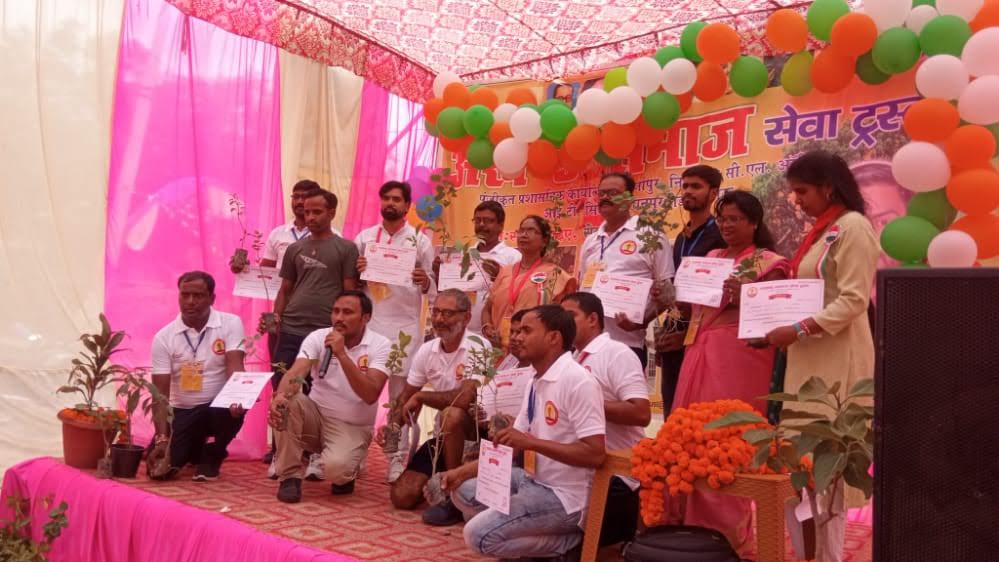
Environment

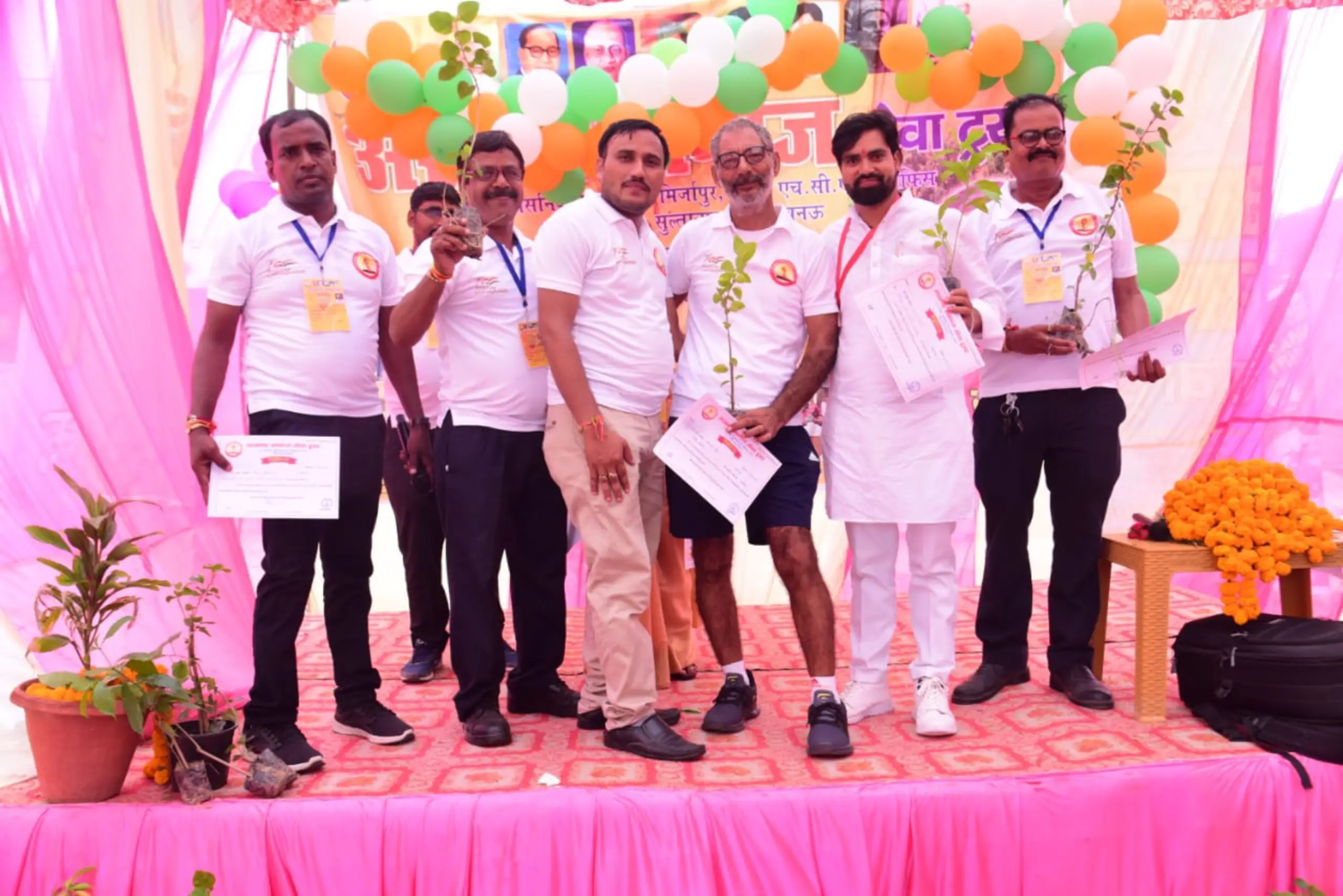
Tree plantation drives and environmental awareness programs for a greener tomorrow.

Be the Reason Someone Smiles Today

When you choose to donate, you're not just giving money—you're giving hope, dignity, and a chance at a better life.

Donate Now →
Our Welfare Initiatives

Programs & Schemes

Old AgePension Scheme

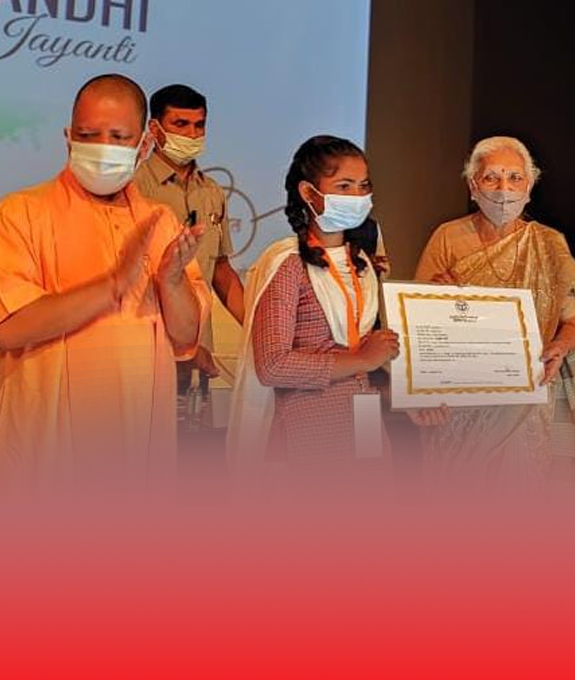
ScholarshipScheme

Join Us

Become a Volunteer

Join our community of changemakers.

01

Application

Fill out a simple form with your details and role preference.

02

Verification

Our team reviews and confirms your application.

03

Welcome!

Receive your membership certificate and start making a difference.

Our Blog

Latest News & Updates

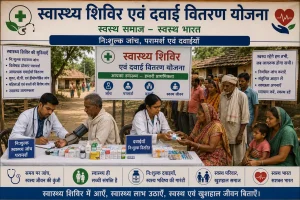
स्वास्थ्य शिविर एवं दवाई वितरण योजना
Blog May 16, 2026

स्वास्थ्य शिविर एवं दवाई वितरण योजना

ग्रामीण और शहरी क्षेत्रों में स्वास्थ्य शिविर आयोजित कर जरूरतमंद लोगों को मुफ्त जांच, दवाई और स्वास्थ्य सेवाएं…

Read More →
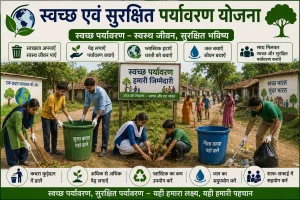
स्वच्छ एवं सुरक्षित पर्यावरण योजना
Blog May 16, 2026

स्वच्छ एवं सुरक्षित पर्यावरण योजना

लोगों को स्वच्छता, पर्यावरण संरक्षण और सुरक्षित जीवनशैली के प्रति जागरूक कर समाज में स्वच्छ वातावरण बनाने का…

Read More →
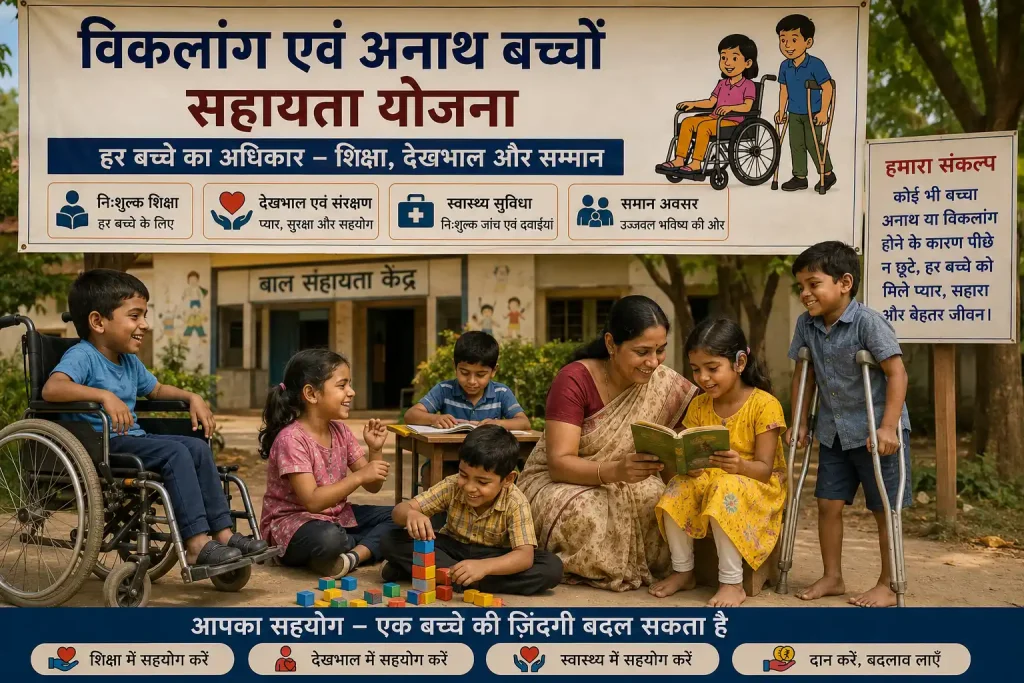
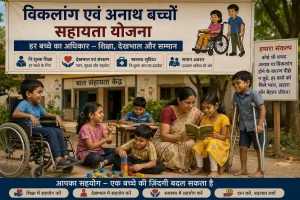
विकलांग एवं अनाथ बच्चों सहायता योजना
Blog May 16, 2026

विकलांग एवं अनाथ बच्चों सहायता योजना

दिव्यांग और अनाथ बच्चों को निःशुल्क शिक्षा, देखभाल, रहने और विकास के लिए विशेष सहायता प्रदान की जाती…

Read More →
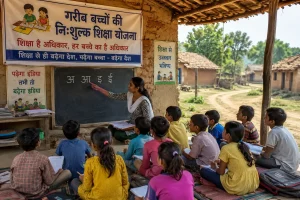
गरीब बच्चों की निःशुल्क शिक्षा योजना
Blog May 16, 2026

गरीब बच्चों की निःशुल्क शिक्षा योजना

इस योजना के तहत आर्थिक रूप से कमजोर बच्चों को मुफ्त शिक्षा, किताबें, स्टेशनरी और अन्य शैक्षणिक सहायता…

Read More →
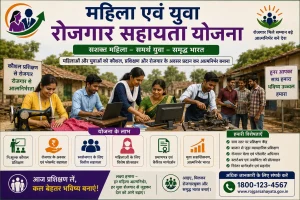
महिला एवं युवा रोजगार सहायता योजना
Blog May 16, 2026

महिला एवं युवा रोजगार सहायता योजना

महिलाओं और युवाओं को रोजगार प्राप्त करने, कौशल विकास और आर्थिक रूप से मजबूत बनने के लिए सहायता…

Read More →
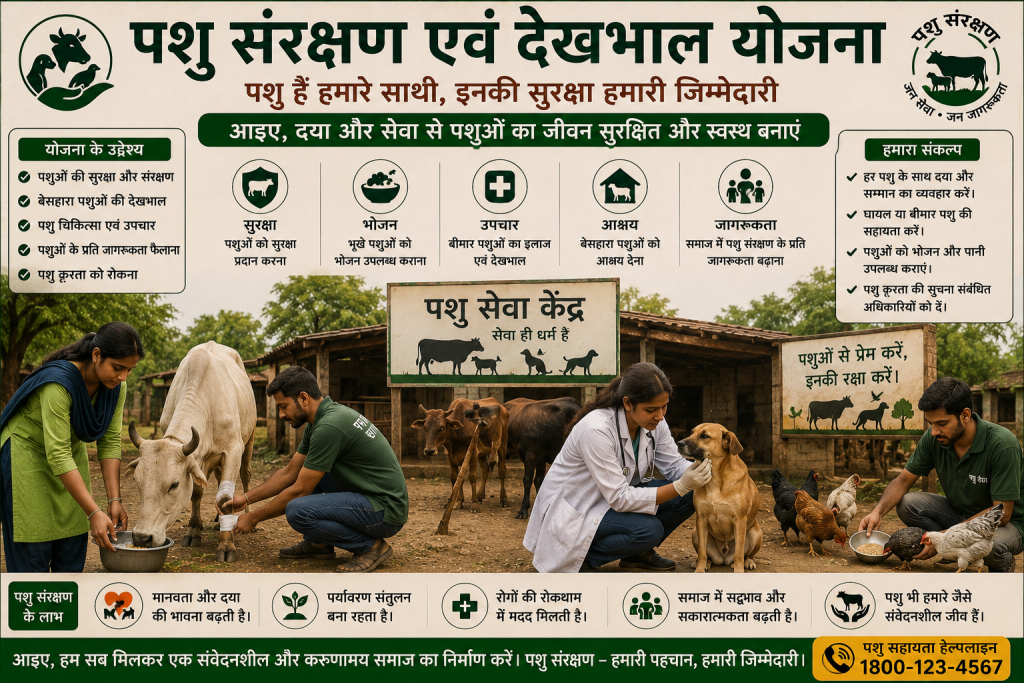
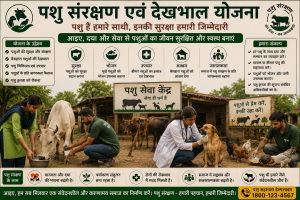
पशु संरक्षण एवं देखभाल योजना
Blog May 16, 2026

पशु संरक्षण एवं देखभाल योजना

पशुओं की सुरक्षा, देखभाल, उपचार और उनके संरक्षण के प्रति लोगों को जागरूक किया जाता है।

Read More →

Chakravartin Ashoka Samrat

Ashoka the Great (r. 268-232 BCE) was the third king of the Mauryan Empire (322-185 BCE) best known for his renunciation of war, development of the concept of dhamma (pious social conduct), and promotion of Buddhism as well as his effective reign of a nearly pan-Indian political entity. At its height, under Ashoka, the Mauryan Empire stretched from modern-day Iran through almost the entirety of the Indian subcontinent. Ashoka was able to rule this vast empire initially through the precepts of the political treatise known as the Arthashastra, attributed to the Prime Minister Chanakya (also known as Kautilya and Vishnugupta, l. c. 350-275 BCE) who served under Ashoka's grandfather Chandragupta (r. c. 321-c.297 BCE) who founded the empire. Ashoka means “without sorrow” which was most likely his given name. He is referred to in his edicts, carved in stone, as Devanampiya Piyadassi which, according to scholar John Keay (and agreed upon by scholarly consensus) means “Beloved of the Gods” and “gracious of mien” . He is said to have been particularly ruthless early in his reign until he launched a campaign against the Kingdom of Kalinga in c. 260 BCE which resulted in such carnage, destruction, and death that Ashoka renounced war and, in time, converted to Buddhism, devoting himself to peace as exemplified in his concept of dhamma. Most of what is known of him, outside of his edicts, comes from Buddhist texts which treat him as a model of conversion and virtuous behavior.

Ashoka
Shivaji

Chhatrapti Shivaji Maharaj

Shivaji Maharaj is one of the great national heroes of India. He created an independent and sovereign state in Maharashtra which was based on justice, welfare of the people and tolerance to all faiths. The aims, objectives and Rajnitee of the Maratha Swaraj under Chhatrapati Shivaji provided a new direction to contemporary politics of India. In course of time, his movement assumed, the form of an all-India struggle; a struggle which was to change the political map of India. Shivaji Maharaj was born at the Shivneri fort near Junnar in Pune district on 19th February 1630. Shivaji’s mother, Jijabai was the daughter of Lakhuji Jadhavrao of Sindkhed. His father Shahajiraje Bhosale was a prominent sardar in the Deccan. At the time of Shivaji Maharaj’s birth, most of the territory in Maharashtra was under the possession of the Nizamshah of Ahmednagar and the Adilshah of Bijapur. In the coastal belt of Konkan there were two sea powers, the Portuguese and the Siddi.

Mahatama Jyotiba Phule

Jyotiba Phule, born on April 11, 1827, in Maharashtra, India, was a social reformer, thinker, and philosopher who dedicated his life to challenging the oppressive social structure of 19th-century India. Phule’s efforts were instrumental in advocating for the rights of marginalized communities, particularly the Dalits (formerly known as untouchables) and women. This article explores the life and legacy of Jyotiba Phule, highlighting his significant contributions to social reform in India. Phule was a staunch advocate for women’s rights and tirelessly worked to combat the prevailing patriarchy. He initiated the practice of educating girls and opened the first school for girls in Pune in 1848. Phule believed that women’s education was essential to uplift society as a whole and fought against child marriage and other oppressive practices that deprived women of their rights. One of Phule’s most significant contributions was his critique of Brahmanical hegemony and the oppressive caste system. He challenged the Brahmins’ claim to superiority by advocating for the rights and dignity of Dalits and other marginalized castes. Phule argued that the caste system perpetuated social and economic inequality and called for its abolition.

Phule
Phule

Savitribai Phule

Savitribai Phule was a trailblazer in providing education for girls and for ostracized portions of society. She became the first female teacher in India (1848) and opened a school for girls with her husband, Jyotirao Phule. She went on to establish a shelter (1864) for destitute women and played a crucial role in grooming Jyotirao Phule’s pioneering institution, Satyashodhak Samaj, (1873) that fought for equality of all classes.Her life is heralded as a beacon of women’s rights in India. She is often referred to as the mother of Indian feminism. Savitribai was born in Naigaon, a small village in the state of Maharashtra, India. As a young girl, Savitribai displayed a strong sense of curiosity and ambition. Savitribai was married to Jyotirao Phule in 1840 at the age of nine and become a child bride. She moved to Pune with him soon after. Savitribai’s most prized possession was a book given to her by a Christian missionary. Impressed by her enthusiasm to learn, Jyotirao taught Savitribai to read and write. Savitribai undertook teachers’ training at Ahmednagar and in Pune. She became a qualified teacher after she passed her 4th examination in 1847.

Bal Gangadhar Tilak

Bal Gangadhar Tilak (born July 23, 1856, Ratnagiri [now in Maharashtra state], India—died August 1, 1920, Bombay [now Mumbai]) was a scholar, mathematician, philosopher, and ardent nationalist who helped lay the foundation for India’s independence by building his own defiance of British rule into a national movement. He founded (1914) and served as president of the Indian Home Rule League. In 1916 he concluded the Lucknow Pact with Mohammed Ali Jinnah, which provided for Hindu-Muslim unity in the nationalist struggle.

Phule
Phule

Bhagat Singh

Bhagat Singh (born September 27, 1907, Lyallpur, western Punjab, India [now in Pakistan]—died March 23, 1931, Lahore [now in Pakistan]) revolutionary hero of the Indian independence movement. Bhagat Singh attended Dayanand Anglo Vedic High School, which was operated by Arya Samaj (a reform sect of modern Hinduism), and then National College, both located in Lahore. He began to protest British rule in India while still a youth and soon fought for national independence. He also worked as a writer and editor in Amritsar for Punjabi- and Urdu-language newspapers espousing Marxist theories. He is credited with popularizing the catchphrase “Inquilab zindabad” (“Long live the revolution”). In 1928 Bhagat Singh plotted with others to kill the police chief responsible for the death of Indian writer and politician Lala Lajpat Rai, one of the founders of National College, during a silent march opposing the Simon Commission. Instead, in a case of mistaken identity, junior officer J.P. Saunders was killed, and Bhagat Singh had to flee Lahore to escape the death penalty. In 1929 he and an associate lobbed a bomb at the Central Legislative Assembly in Delhi to protest the implementation of the Defence of India Act and then surrendered. He was hanged at the age of 23 for the murder of Saunders.

Chhatrapati Shahuji Maharaj

Shahu (also known as Rajarshi Shahu Maharaj or Chhatrapati Shahu Maharaj) GCSI GCIE GCVO of the Bhonsle dynasty of Marathas was a Raja (reign. 1894 – 1900) and the first Maharaja (1900-1922) of the Indian princely state of Kolhapur. Chhatrapati Shahu Maharaj, also known as Rajarshi Shahu was considered a true democrat and social reformer. Greatly influenced by the contributions of social reformer Jyotiba Phule, Shahu Maharaj was an able ruler who was associated with many progressive policies during his rule. From his coronation in 1894 till his demise in 1922, he worked for the cause of the lower caste subjects in his state. Primary education to all regardless of caste and creed was one of his most significant priorities.

Phule
Phule

Subhas Chandra Bose

Subhas Chandra Bose (born c. January 23, 1897, Cuttack, Orissa [now Odisha], India—died August 18, 1945, Taipei, Taiwan?) Indian revolutionary prominent in the independence movement against British rule of India. He also led an Indian national force from abroad against the Western powers during World War II. He was a contemporary of Mohandas K. Gandhi, at times an ally and at other times an adversary. Bose was known in particular for his militant approach to independence and for his push for socialist policies. The son of a wealthy and prominent Bengali lawyer, Bose studied at Presidency College, Calcutta (Kolkata), from which he was expelled in 1916 for nationalist activities, and the Scottish Churches College (graduating in 1919). He then was sent by his parents to the University of Cambridge in England to prepare for the Indian Civil Service. In 1920 he passed the civil service examination, but in April 1921, after hearing of the nationalist turmoils in India, he resigned his candidacy and hurried back to India. Throughout his career, especially in its early stages, he was supported financially and emotionally by an elder brother, Sarat Chandra Bose (1889–1950), a wealthy Calcutta lawyer and Indian National Congress (also known as the Congress Party) politician.

Dr. B.R. Ambedkar

Dr. Bhim Rao Ambedkar was born on April 14, 1891, at the Mhow cantonment to a low-caste Mahar family. Dr. B. R. Ambedkar was born from the lowest of the lowest castes. His radical ideas to address the Caste System were met with open resistance from the Upper Castes, making his life one of struggle. He also brilliantly graduated with a doctorate in economics from Columbia University in 1917. The youngster who endured excruciating caste humiliation rose to the position of first Minister of Law in independent India and helped draft the Constitution. Dr. Ambedkar challenged the current status quo through his fight against Brahmanical Patriarchy, and his radical suggestions for the Hindu Code Bill. Dr. B.R. Ambedkar is credited with creating India's Constitution. He made sure that the democratic form of government has the necessary checks and balances in place.

Phule
×
👋

Welcome to Akhand Samaj Seva Trust

Together we serve humanity with compassion and service.

Explore Website
×

Scan & Donate

QR Code

Use any UPI app to scan and donate

Click to pay
WhatsApp